What Can't Be Picked Up by Junk Removal in Florida?
A short list of what every licensed hauler in Pasco County has to turn away, and where those items actually belong.
A short list of what every licensed hauler in Pasco County has to turn away, and where those items actually belong.
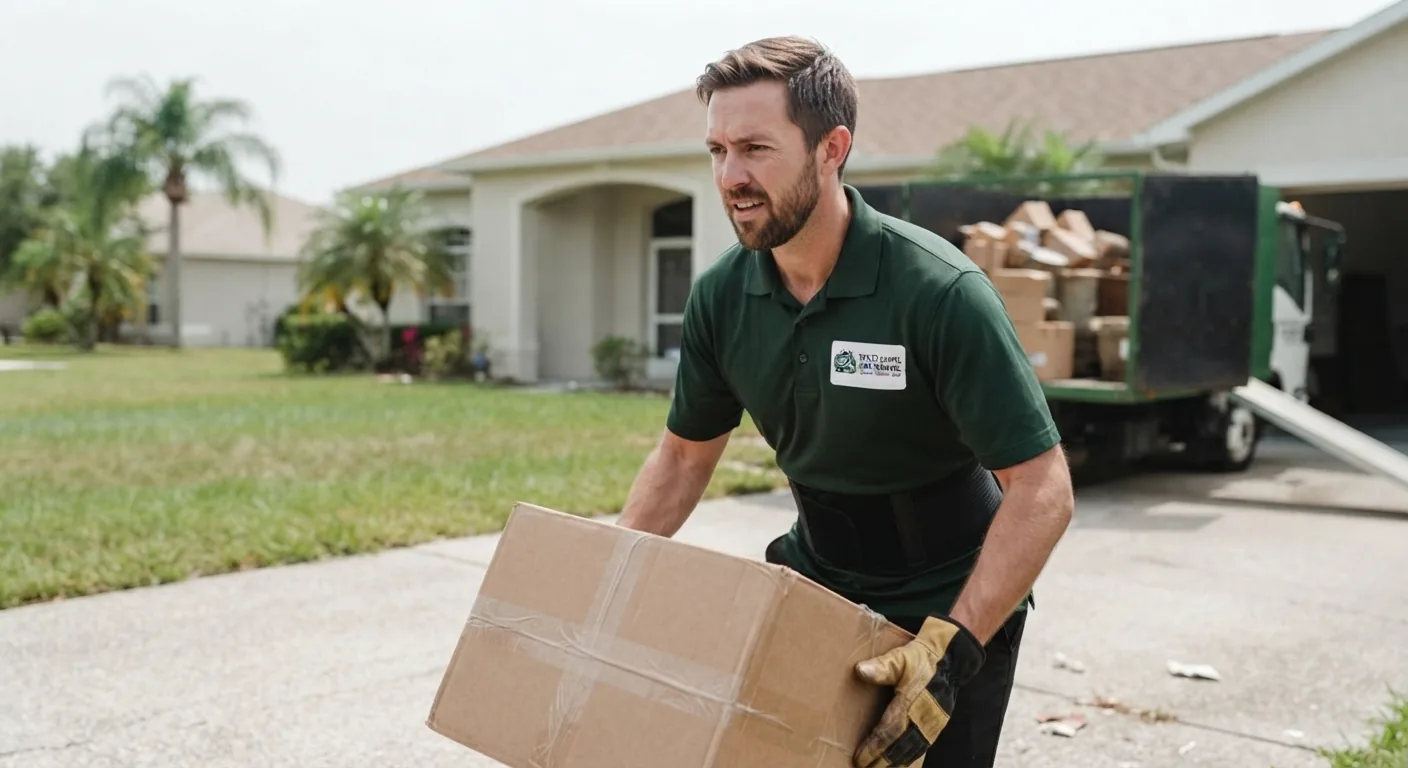
Most of what fills a Wesley Chapel garage — old furniture, broken appliances, boxes of who-knows-what — is exactly the kind of thing a junk removal crew is built to haul away in one trip. But Florida regulations, backed by EPA hazardous waste rules, keep a specific list of items off every legitimate hauler's truck, ours included. Knowing that list ahead of time saves you from scheduling a pickup that has to be partially turned away at the curb.
Junk removal trucks haul general debris to transfer stations and landfills that are not permitted to accept hazardous material. Mixing something like old motor oil or a car battery into a load of furniture and boxes risks contaminating the entire load, which is why the restriction isn't a judgment call by the crew — it's baked into how the disposal facilities themselves are licensed. Pasco County, like the rest of Florida, maintains separate household hazardous waste programs specifically because these items need different handling from the moment they leave your property.
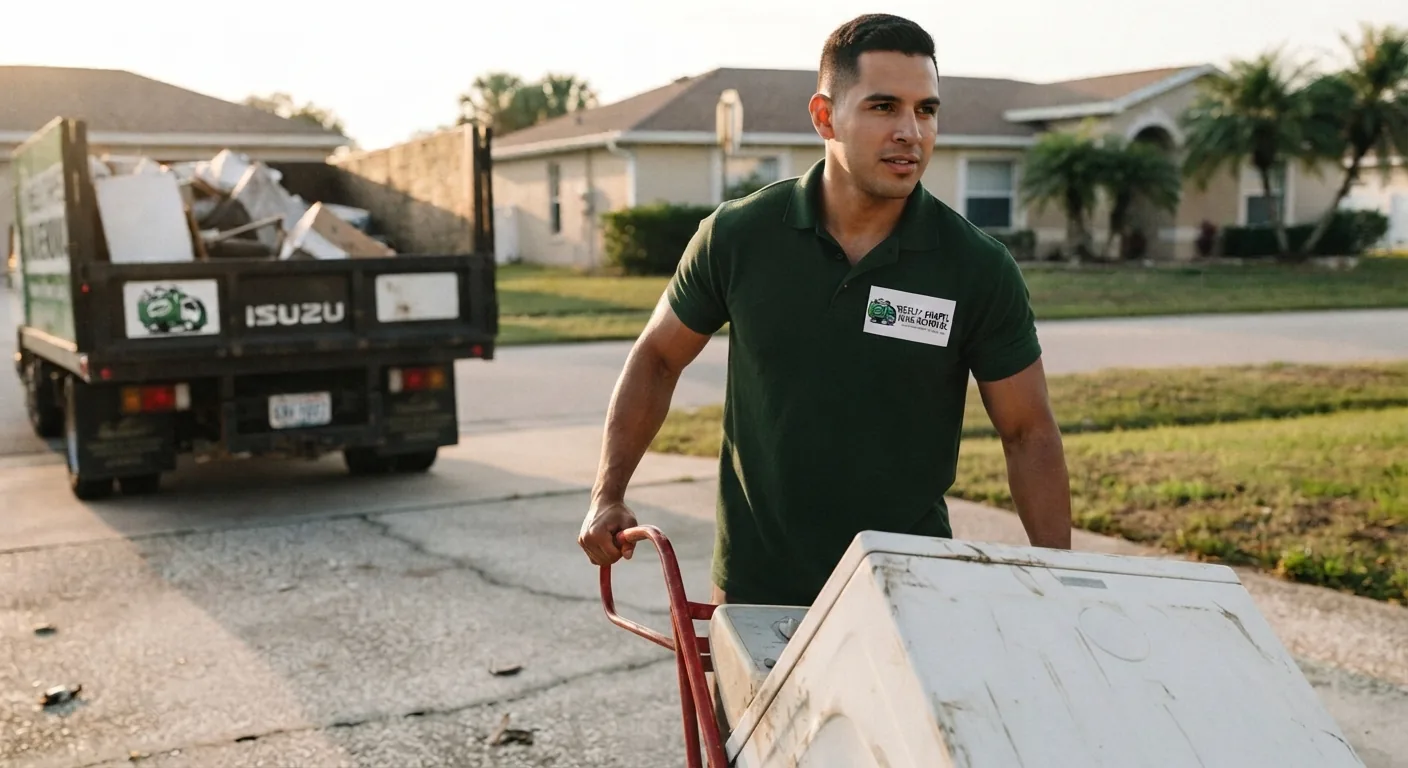
None of this means you're stuck with them. Pasco County runs a household hazardous waste collection program that accepts paint, chemicals, batteries, and fuels from residents at no charge — it's worth checking their current drop-off schedule before your junk removal appointment so both loads leave the property around the same time. Propane tanks can usually be exchanged or safely disposed of at retailers that sell propane exchanges, including several near Wesley Chapel and Land O' Lakes. Auto parts stores almost always take old car batteries for free. And for suspected asbestos, a licensed abatement contractor — not a general hauling crew — is the only safe next call.
The good news: this list is short, and it rarely affects a typical garage cleanout or furniture removal job beyond a stray can of old paint or a forgotten propane tank in the corner. If you're not sure whether something on your list qualifies, just mention it when you call or text a photo — we'd rather flag it upfront than show up and have to leave one item behind. Sorting it out before pickup day keeps your appointment moving fast, since the rest of the load can still be handled exactly as planned.
Jobs like estate cleanouts and foreclosure trash-outs are the most likely to turn up a restricted item or two simply because of how much ground they cover — garages, sheds, and utility closets that haven't been sorted in years. A quick walkthrough before the crew arrives, even just a look in cabinets and the garage corners, tends to catch these ahead of time. For more on getting a space ready, see How to Prepare for Your Junk Removal Appointment.
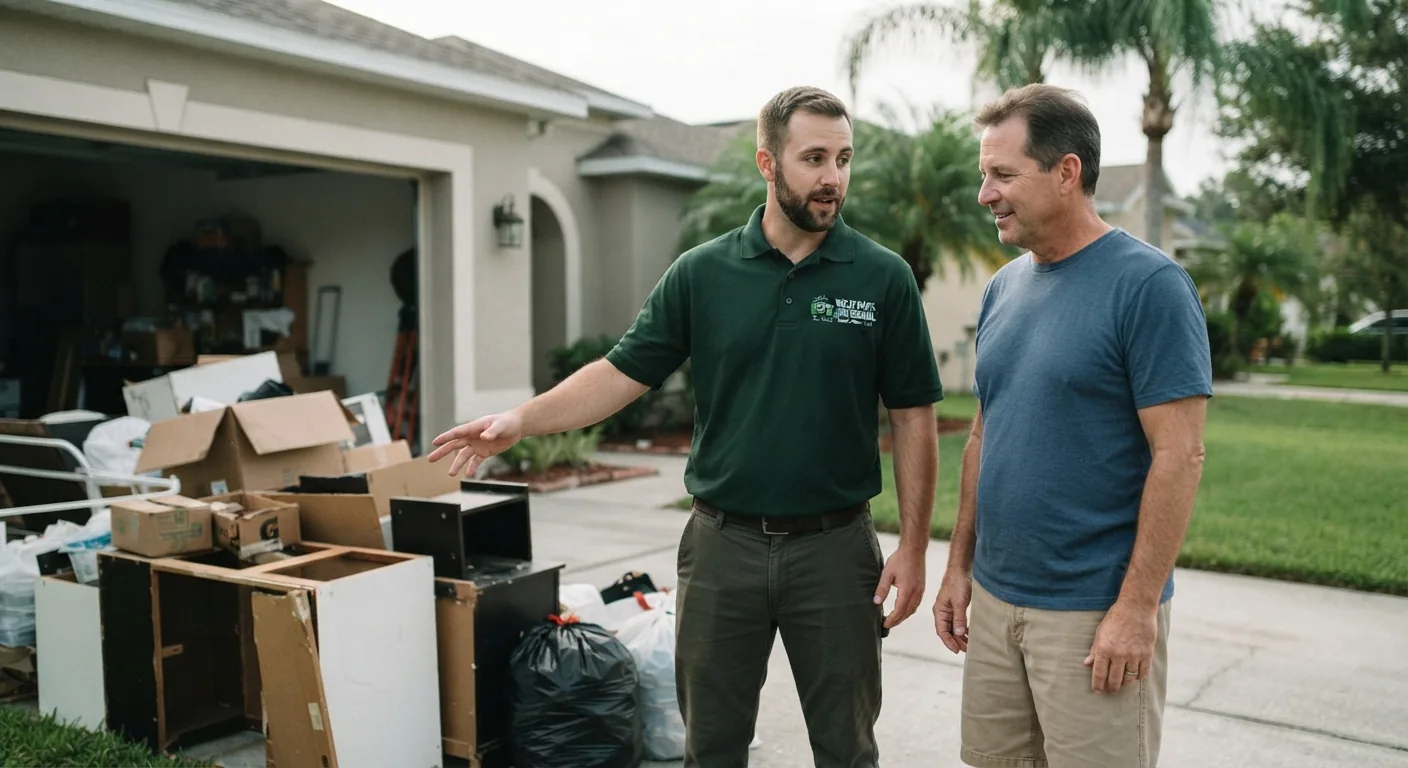
In practice, this rarely slows anything down. On a normal garage cleanout, the crew is already scanning for the short list of restricted items during the initial walkthrough — a can of old paint on a shelf, a propane tank tucked behind a lawnmower — and simply sets those aside while loading everything else as planned. You're never left scrambling to find a separate hauler mid-appointment; the rest of the job proceeds normally, and we'll point you toward the right local resource for whatever has to stay behind.
Large quantities of an otherwise-normal item can occasionally shift how something is handled too. A single old car battery is a quick, routine set-aside; a garage with a dozen of them from a hobbyist's workshop is worth mentioning upfront so the crew can plan the visit accordingly. The same goes for large volumes of construction-related material on a construction debris job — most of it is fine for general hauling, but flagging anything unusual in bulk avoids a surprise at pickup.
If you're staring at something and genuinely unsure which pile it belongs in, just ask. Call or text a photo and we'll tell you straight — whether it's something we can load onto the truck, or something better routed to Pasco County's hazardous waste program first.
Wet or liquid paint, no — it's regulated as hazardous waste in Florida. Fully dried-out, empty paint cans are usually fine, since dried latex paint is treated as solid waste rather than hazardous material. When in doubt, leave the lid off for a few days to confirm it's solid before your pickup.
No — propane tanks, full or empty, are combustible and can't ride in a general debris load. Pasco County's household hazardous waste program and most propane exchange retailers will take them off your hands safely.
We can't haul lead-acid batteries as general junk, but they're one of the easiest items to recycle — most auto parts stores in Wesley Chapel accept them for free and often pay a small core deposit.
This needs to be disclosed before pickup so it can be bagged and handled correctly — untreated, infested items risk spreading to other customers' loads and our truck. Ask when you book and we'll walk you through it.
No, never, regardless of how small the amount. Suspected asbestos — often found in older popcorn ceilings, floor tile, or pipe insulation — requires a licensed abatement contractor, not a junk removal crew.
A short walkthrough of what to do (and skip) before the truck shows up, so your appointment window turns into a fast, flat-priced pickup.
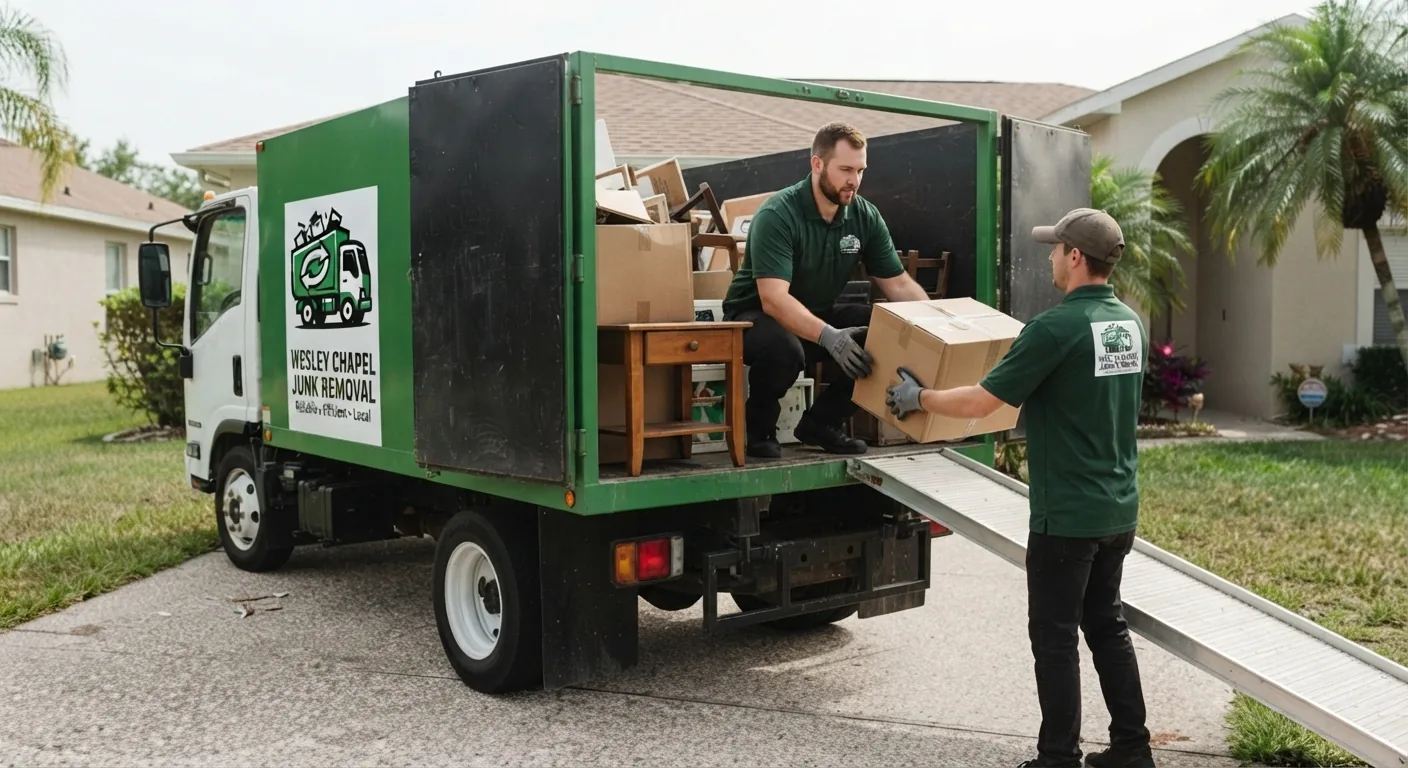
Where your old furniture, appliances, and boxes actually go after the truck pulls away — donation, recycling, and landfill, in that order.
When a permit actually applies — sheds, structures, and curbside dumpsters — versus the everyday hauling jobs that never need one.
Text a photo and we'll tell you straight — same-day answers, no guessing.